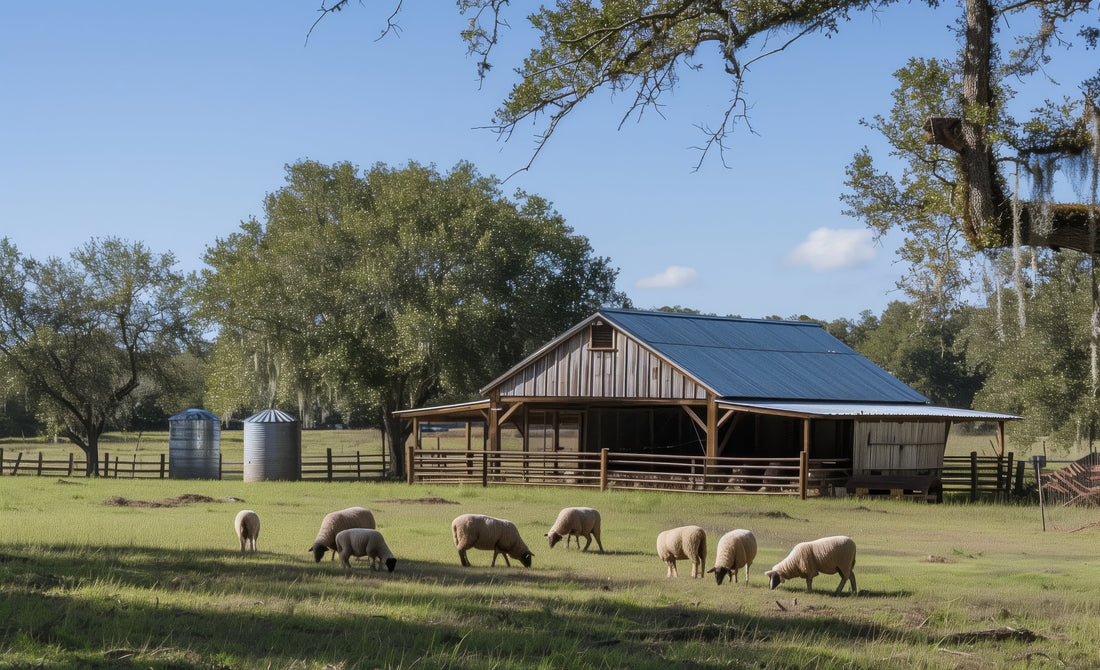
Wool is one of Earth's most ancient fabrics—worn by humans, tall and tiny, for thousands of years. It kept our ancestors warm, dry and comfortable in clothes they wore again and again. And yet, somewhere between the rise of synthetic fibres and the age of fast fashion, we sort of... forgot about it.
The Magic of Wool
It starts with the fibre itself.
Each strand of wool is hollow at its core, lined on the outside with tiny microscopic hooks—a structure so brilliantly designed, you'd think someone engineered it on purpose. And in a way, millions of years of evolution did exactly that. Because of this structure, wool can do something no synthetic fibre comes close to: absorb moisture and repel it, at the same time.
Wool holds almost twice its own weight in water which means you stay dry even when your clothing gets wet.
That same structure also makes wool one of nature's best temperature regulators. The outer surface of each fibre rebounds humidity, much like a wetsuit, retaining your body heat while pushing cold air away. On warmer days, that same mechanism can have a cooling effect. Wool works with your body in every season.
Then there's the antibacterial piece. Wool absorbs and locks away moisture before bacteria can take hold which means less odour, less washing, and more wears between cycles. And wool is naturally flame retardant, though we want to be transparent: Bumby wool doesn't hold a certified flame retardant classification. What it does hold is a quiet, centuries-long track record of being one of the most resilient fabrics on the planet.
Wool in the World
Wool has been with us since around 10,000 BCE making it quite possibly the oldest fabric in human history. Long before synthetics, before fast fashion, before seasonal collections, there was wool.
In many cultures, processing wool was more than a practical task. It was a community event - a reason to gather, to talk, to create alongside your neighbours. That village-like spirit around wool hasn't gone anywhere. You can still find it in the online communities that form around natural fibres today, and you'll definitely find it in ours.
Over time, wool found its way into healthcare, athletic wear, outdoor gear and aging care because its qualities were genuinely too valuable to ignore. Then came the post-WWII industrial boom. Synthetic fibres arrived in force, machine-washing became the norm, and wool quietly fell out of fashion for a while.
But with the right pre-treatment processes (like the ones we use at Bumby) wool is fully machine washable today. No hand-washing. No soaking. A gentle cycle, and you're done. The old ways, made a little easier.
Where Does Wool Come From?
Not all wool is the same, and Merino is a name worth knowing.
It refers to a specific breed of sheep, typically raised in Australia, where dry air conditions help produce an exceptionally fine, soft fibre. The thinner the fibre, the softer the garment and Merino sits at the very top of that scale. The softness isn't a special treatment or additive. It's simply geography and breed, doing what they do best.
Bumby wool is sourced from Australian Merino sheep - fine, soft and carefully selected to meet high ethical, environmental and animal welfare standards. Because what we start with matters just as much as what we create from it.
What Makes Bumby Wool Different?
A lot of wool still comes with a "hand wash only" tag. That's not us.
All Bumby wool is pre-treated so it's machine washable, right from the start. Every order includes everything you need to care for your pieces up to two months, along with clear instructions so you always know exactly what to do.
And if your piece ever needs a repair, an alteration, or just a little refresh down the road? Send it back to us. We'll sort it out because wool, the good kind, lasts a lifetime. We want yours to as well.