Wool School — Understanding the Fibre

We were taught to think of wool as the fabric you reach for when the snow shows up and your toes start questioning your life choices. Cozy socks. Heavy sweaters. That blanket in the car you “just leave there for emergencies.”
But wool has been showing up for humans in every season for a very long time. Our ancestors knew it. Outdoor families know it. And once you understand what wool actually does at a fibre level, the reputation starts to feel like a serious underestimation.
Wool fibre is hollow. Actually hollow.
There is a canal running through each individual strand that traps air. Trapped air is what insulates — the same principle as a down jacket or a double-pane window. Air doesn’t conduct temperature well, so it keeps warmth in and cold out.

But here is where it gets interesting: that same hollow structure works in reverse. In warm weather, wool wicks moisture away from skin and releases it as vapour. The fibre breathes. It moves humidity out before your body registers it as sweat.
In cold weather it insulates. In warm weather it breathes. It does both things at once, and very little else can say the same.
This is why wool has been the fabric of choice for centuries of outdoor workers, sailors, shepherds, and alpine athletes. Not because it was the only option. Because it works in both directions, across all conditions, against skin that has real and varying needs.
Wool in summer: not the contradiction it sounds like
Wool is for sun, shade, hiking trails, lake days, camping trips, water tables, sweaty walks, garden mornings, playground afternoons, and all the messy middle parts of summer. The Scottish kilted gentlemen with their wool compression socks and impressively ventilated arrangements knew it. The 1000 Hours Outside crowd knows it. The vintage black wool swimsuits from the early 1900s? They knew something back then too.

It covers skin — and does something about the sun while it’s at it
Wool naturally absorbs UV radiation across the entire spectrum. According to the International Wool Textile Organisation, woollen apparel typically achieves a UPF rating of between 20 and 50 depending on the density and dye of the fabric. Compare that to the average cotton t-shirt, which sits around UPF 10. Denser knits — like the interlock merino used for Bumby diaper covers and clothing — trend toward the higher end of that range.
Long sleeves, pants, dresses, tanks, rompers — when skin is covered in wool, that coverage is doing real work. Vitamin D still happens. The sun still reaches face, hands, and feet. Wool just quietly handles the rest.
A note on UPF and water: UPF does decrease when fabric is wet, so this is most relevant for dry-wear layers. Keep that in mind for active water play.

Fresh water is fine. Pool water, not so much.
Wool and fresh water are a surprisingly good summer pair. Lake splashing, water tables, sprinklers, surprise puddle encounters — lightweight merino dries faster than most people expect, especially in warm weather with any airflow at all.
Chlorinated pool water is a different story. Chlorine damages the protein structure of wool fibre over time, so regular pool use isn’t something we recommend. But lakes, rivers, and rain? All fair game. Fun fact for the textile history nerds: those vintage black wool swimsuits were real. Wool was the original swim fabric. They were not wrong. They were just ahead of schedule.

That campfire smell? Gone. As if by magic.
Summer memories smell like sunscreen, dirt, lake water, pine needles, and campfire smoke. The good news is that wool is naturally extraordinary at managing odour. Biochemically, the lanolin-coated fibres don’t hold onto smells the way synthetic fabrics do. Often, a smoky wool layer just needs to be hung up overnight. Give it some air, give it some time, and the campfire smell fades away quietly. No laundry emergency required.
Naturally flame resistant — and we have the stories to prove it
This one is close to home.
Stories get quietly passed around in outdoor and natural parenting communities about wool doing something remarkable in moments that could have been much worse. A child lost in the woods, temperatures dropping, found days later. The consensus from the people who found him: the wool kept his core temperature regulated in a way that synthetic layers simply would not have.

And then there is the campfire story. A customer told us about the night her little one fell near an open fire. Head and feet were burned — heartbreaking. But the body, covered neck to ankle in Bumby wool? Fine. “It was a miracle,” she said. What we know is that it wasn’t luck. It was chemistry.
Wool requires a significantly higher temperature to ignite compared to cotton or polyester. When it does burn, it self-extinguishes and forms a soft ash — rather than melting and sticking to skin the way synthetic fibres do. The military has known this for centuries. Emergency services still rely on it.
We are not saying wool is fireproof. We are not saying skip campfire safety. But when your family is outside and gathered around a fire, what is covering their bodies matters.
Why wool doesn’t smell (and the chemistry behind it)
People assume something that holds moisture must hold smell too. It doesn’t. In fact, it does the opposite.

Wool contains lanolin — a naturally occurring wax that coats each fibre at a molecular level. When urine, sweat, or whatever the day throws at you meets lanolin, it triggers a mild chemical reaction. The lanolin essentially converts it. Neutralizes the ammonia. Breaks it down into something inert.
Wool doesn’t just block smell. It dismantles it.
This is why you can wear a wool piece for days, air it out overnight, and it’s genuinely good to go. This is why a wool sweater doesn’t smell like a gym bag after a long hike. The fibre is doing chemistry you never asked it to do, constantly, quietly, without fuss.
There’s a reason humans have been working with wool for thousands of years. It works. It still works.
What wool actually does
Temperature regulation. Hollow fibres trap air to insulate in cold and wick moisture as vapour in heat. Works in both directions, simultaneously.
UV protection. Typical UPF of 20–50 depending on density and dye. Denser knits like interlock merino trend toward the higher end.
Odour resistance. Lanolin reacts with and neutralizes ammonia rather than trapping it. Wool aired overnight is genuinely clean, not just aired out.
Flame resistance. Higher ignition temperature than cotton or synthetics. Self-extinguishes and chars rather than melting into skin.
Moisture management. Can absorb up to 30% of its own weight in moisture before feeling wet. Breathes throughout.
Durability. Wool fibre can bend back on itself tens of thousands of times before breaking. Quality wool, cared for well, lasts for years.
The waulking song: when finishing wool was a community event

Before machines, before factories, before spinning mills, there was waulking.
Waulking is a traditional Scottish and Gaelic wool-finishing process. A group of women would gather around a long table with a length of freshly woven tweed stretched out wet between them. They’d pound it with their hands, their feet, sometimes boards — working rhythmically to tighten the weave and make the fabric dense and weather-ready.
Here’s the part that doesn’t come up in the pretty versions of this story: the cloth was first soaked in stale urine. The ammonia in aged urine scoured the fibre and fixed the dye. During the waulking itself, one woman would walk the length of the shed pouring hot urine from a kettle over the cloth while everyone pulled their feet back from the splashes. Crude jokes were made. The work carried on.
And through all of it, they sang. The waulking songs are some of the oldest surviving folk music from the Gaelic world — call-and-response, passed down through generations, timed to the rhythm of the work. The songs at the start and end were slow and serious. The ones in the middle were quick and jolly. No song was ever repeated in a session, because repeating one was considered bad luck. When the cloth was done the women measured it in finger-lengths to decide if another song was needed. Afterward there was a ceilidh. The men were invited back in.
Making something — really making it — used to be this. Communal, physical, a little chaotic, deeply skilled, and genuinely celebrated when it was done.
Bumby is a small operation, but the community around it has always felt like that table. The wool hasn’t changed. The songs are just different now.
Caring for wool: simpler than its reputation suggests
Wool’s care reputation is worse than it deserves. Most of the shrinking horror stories come from the same things: too hot, too agitated, too rough. Avoid those and you’re in good shape.

For most wool pieces: machine wash cold on a gentle cycle with a wool-safe detergent. We use and recommend Unicorn Clean. Lay flat to dry — never the dryer, never wringing. That’s essentially it.
For wool diaper covers specifically, there’s one extra step: lanolizing. Because lanolin is what makes wool water-resistant and odour-neutralizing, covers need to be re-lanolized periodically — especially after washing. We have a full guide for that. And every Bumby cover ships pre-lanolized, so the first use requires nothing from you at all.
Why Bumby wool can be machine washed: Before a single piece is cut and sewn, the fabric goes through a full preshrink process — boiling hot water and agitation, essentially the worst-case scenario for wool, on purpose. We run it through until the fibre has done what it’s going to do. Then the lycra core in the yarn holds the structure in place. So when you wash your Bumby in cold water on a gentle cycle, you’re nowhere near the conditions it already survived.
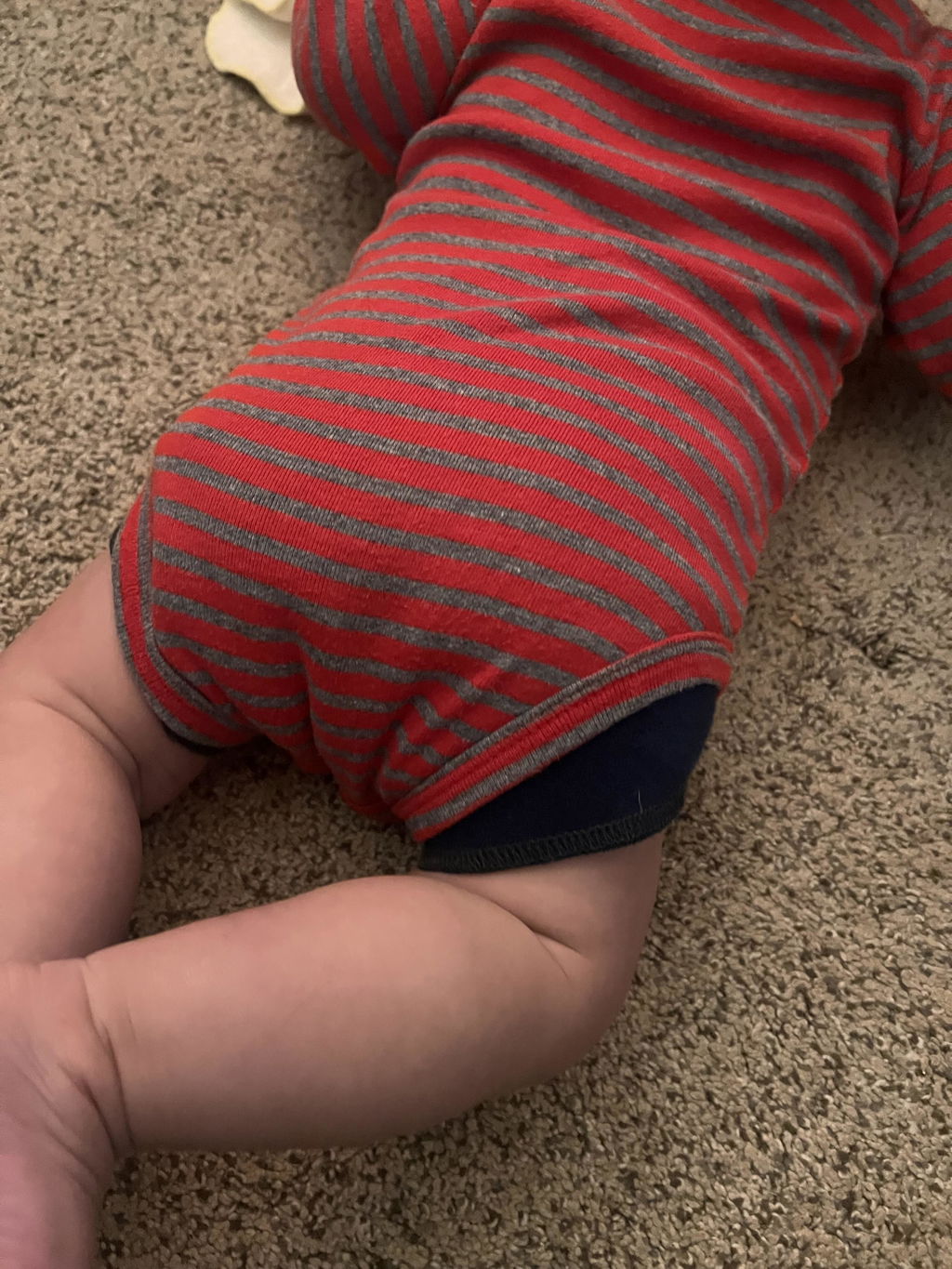
Which is also, by the way, why we make diaper covers out of it. All the properties you just read about — the temperature regulation, the odour management, the breathability — turn out to be exactly what you want sitting against a baby’s skin overnight. If you want to see how that plays out in practice, the Cloth Diaper 101 guide covers the full diapering system.
Sources: IWTO — UV Protection & Wool · IWTO — Wool Flame Resistance