Wool Diapering, From the Beginning
Right, let’s start from the very beginning.
You might be here because a friend mentioned wool covers and you’re not sure whether to take them seriously. Or you did some searching at midnight, found a thread full of acronyms, and quietly closed the tab. Maybe you tried cloth diapers before and it seemed like more effort than it was worth. Maybe someone in a group said “just use wool” like that explained anything.
Wherever you’re coming from, you don’t need to already understand this. That’s the whole point of this page.
A cloth diaper is two parts
That’s it. That’s the whole system.
There’s the diaper or absorbent layer underneath—the part that handles the absorbing. And there’s the outer layer, called a cover—the part that helps keep everything contained.
The absorbent part might be a flat, a prefold, a fitted, or a contour. Some families even use wool over disposables or over a PUL diaper that’s leaking on them and needs a little backup.
A flat is a large square of fabric—literally just fabric, nothing complicated—that you fold to fit your baby and fasten in place with a snappi or a pin. A prefold is the same idea, but stitched into panels so there’s more absorbency in the middle where you need it most. Fitteds and contours are shaped options that still do the same basic job: absorb, contain, and fit under a cover.
That’s the setup. Everything else is just variations on those two parts.
The cover is where Bumby comes in
Most covers on the market are made from PUL—polyurethane laminate, which is basically a thin plastic coating bonded to fabric. They do the job. But if you’re looking for something simpler, more natural, and more breathable, wool is a different thing entirely.
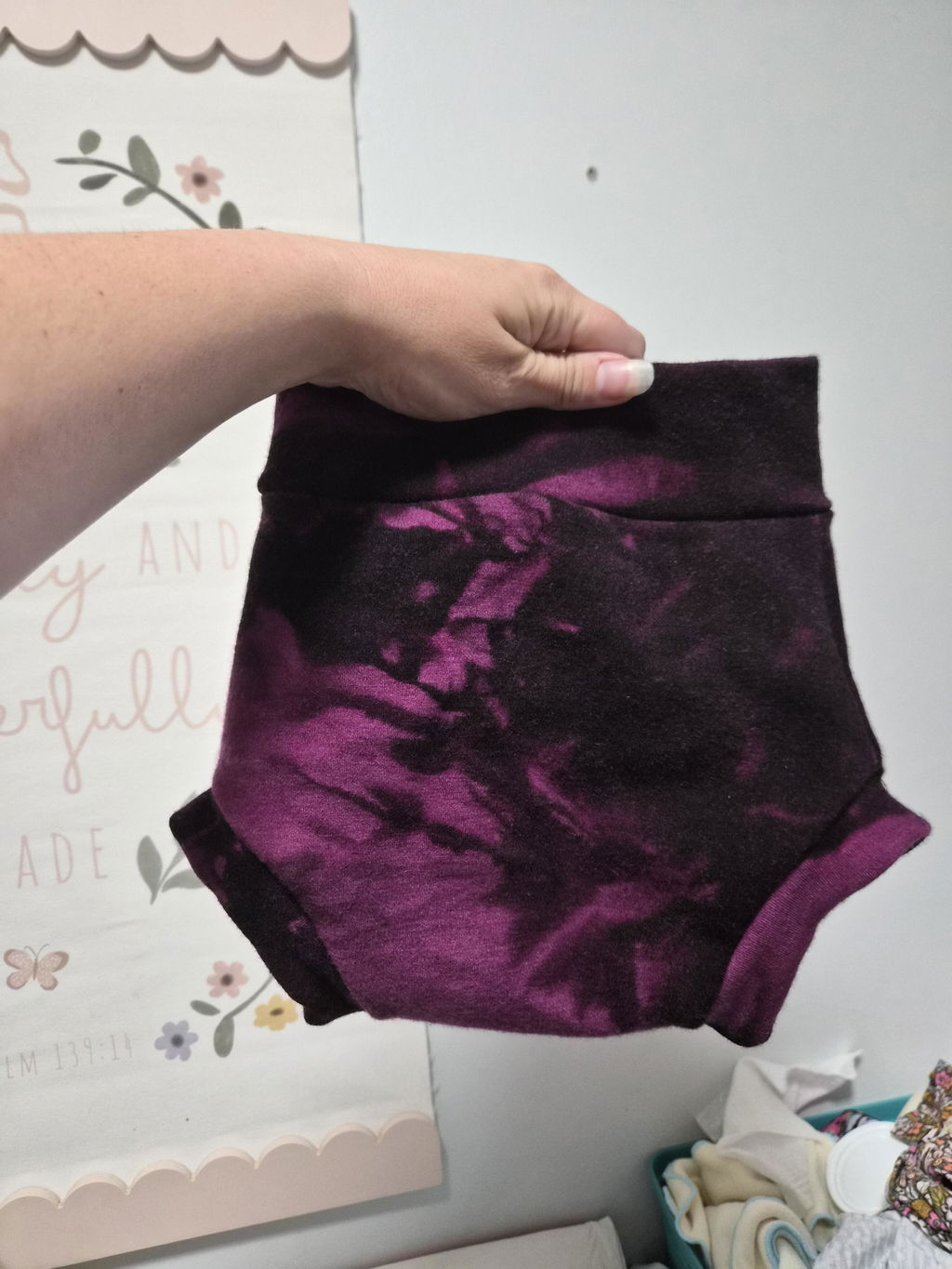
A Bumby diaper cover is wool. And wool does some genuinely impressive things.
Wool can absorb moisture without feeling wet on the surface, so the layer underneath can be damp while your baby’s skin stays more comfortable. The fibre is hollow, which helps it trap warmth in cooler weather and release heat when it’s warm. It regulates in both directions.
And then there’s lanolin.
Lanolin is the natural wax that comes from sheep’s wool. It’s what gives wool its water-resistant quality, and it also reacts with urine in a way that helps neutralize it. Which means a wool cover stays fresher between washes than most people expect, and it doesn’t need to be washed after every single use.
That part sounds like a rumour the first time you hear it, but it’s real. Humans have been using wool this way for a very long time—we just forgot about it for a while.
The Bumby way
Bumby keeps things simple.
Step 1: Choose the diaper or absorbent layer that works for your family—whether that’s a flat, prefold, fitted, contour, disposable, or a PUL diaper that needs extra leak protection.
Step 2: Add your Bumby cover.
That’s it.
We include the care basics and instructions you need to get started, so you’re not left guessing when your order arrives.
Caring for your wool cover
This is the part people worry about most, so let’s just go through it.
Your Bumby cover arrives ready to use. You don’t need to prep it before putting it on your baby the first time.
On a normal day, you take the cover off, let it air dry, and use it again next time. That’s standard. The lanolin is doing its job, so you’re not washing it after every wear.
After a few wears—how many depends on your baby, but often every few days—you’ll want to air it out well or rinse it. When it starts to feel less water-resistant or smell faster than usual, it’s time for a full wash and a lanolin treatment.
For a full wash, use a gentle cold machine cycle with a wool-safe detergent like Unicorn Clean. While the cover is still wet, apply your lanolin treatment, then lay it flat to dry. Under normal use, most people find a deeper wash happens every couple of weeks or so.
That’s the whole care process. It sounds like more on paper than it feels in real life.
How many do you actually need
Usually less than you think.
Because wool covers are reused between washes, most families don’t need a huge stack. A lot of people do well with four to six covers in rotation. Some manage with fewer.
The diapers or absorbent layers underneath do get washed every time, because they’re handling the actual absorbency. So you’ll want more of those. A dozen is a solid starting point for many families, depending on what system you’re using.
And the cover usually only comes out of rotation entirely if there’s a poop situation. Pee, it handles. That’s the short version.
Which cover is right for you
There are four styles. Here’s the honest breakdown.
Traditional
The everyday workhorse. Trim fit, lower rise, and a good starting point for a lot of families. Easy, reliable, and works well with most body types and most diaper setups.
Explorer
Explorer is similar in general size to the Traditional, but with more coverage through the legs—more like a little pair of shorts. If you want the same general feel with a bit more coverage, this is a nice in-between option.
Abrazo
The most adjustable option. Abrazo uses hook-and-loop closure—the same kind of fastening system people know from disposables—with an adjustable rise that changes as your baby grows. If you want one cover that adapts over time, this is the one.
You do not have to do this perfectly
A lot of people start with one cover. Some use wool at night and something else during the day while they get used to it. Some take a little while to get their lanolin rhythm dialled in.
That’s normal.
Wool is not precious. It’s durable. It was made to be worn in real life. If you mess up the first wash, it’s not ruined. If you forget to re-lanolin for a bit longer than planned, it’s okay. If you have questions at 10 p.m. and you’re not sure whether what you’re seeing is normal, there are people who’ve been exactly where you are and can help.
We’ve been helping families figure this out for a long time, and we’re not here to push you toward the most expensive thing or the most complicated answer. We’ll ask a few questions, point you in the right direction, and help you find what works for your baby and your life.
That community is here. We’re here. Start wherever you are.